
How Can I Tell the Sex of a Kitten
- Understanding Kitten Anatomy
- The Most Important Clue: Anogenital Distance
- Look at the Shape of the Genital Opening
- Can You See Testicles in a Male Kitten?
- How to Tell the Sex of a Kitten Step by Step
- When Is the Best Age to Sex a Kitten?
- Common Mistakes When Sexing Kittens
- Can You Tell a Kitten's Sex by Behavior?
- Does Coat Color Indicate a Kitten's Sex?
- When Should a Veterinarian Confirm the Sex?
- Special Cases: When the Anatomy Isn't Clear
- Male vs. Female Kitten: Quick Comparison
- Frequently Asked Questions
- How can I tell if my kitten is male or female?
- Can you tell the sex of a newborn kitten?
- At what age can you tell a kitten's sex?
- Can a female kitten look like a male?
- Can a male kitten look like a female?
- Is coat color a reliable way to determine kitten sex?
- Should I take my kitten to a veterinarian to determine its sex?
- Final Thoughts
Determining the sex of a kitten is usually possible by carefully examining the area under the tail. The most reliable clues are the distance between the anus and genital opening and the shape of the genital opening. Male kittens generally have a greater distance between the two openings, while female kittens have a shorter distance.
How Can I Tell the Sex of a Kitten? A Complete Guide
Figuring out whether a kitten is male or female can be surprisingly difficult, especially when the kitten is very young. Newborn kittens are tiny, their anatomy is not fully developed, and the differences between males and females can be subtle.
Fortunately, there are several reliable ways to determine a kitten's sex. By carefully examining the area beneath the tail and knowing what features to look for, you can often identify whether a kitten is male or female. When the anatomy is unclear, however, a veterinarian can provide confirmation.
Understanding Kitten Anatomy
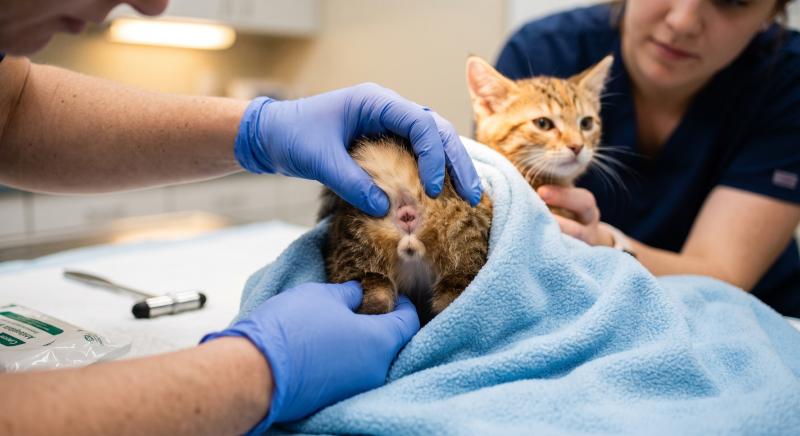
Before trying to determine a kitten's sex, it helps to understand the basic anatomy you will see beneath the tail. Both male and female kittens have an anus and a genital opening, but the position, shape, and distance between these openings are different.
Female Kitten Anatomy
In a female kitten, the genital opening is located very close to the anus. The genital opening typically looks like a vertical slit. Because the two openings are close together, the area can sometimes resemble an upside-down exclamation mark.
Male Kitten Anatomy
In a male kitten, the genital opening is farther away from the anus. The genital opening is usually more rounded than the female's vertical slit. As the kitten grows, the testicles may become visible or palpable between the anus and genital opening, although this is not always obvious in very young kittens.
The Most Important Clue: Anogenital Distance
One of the most useful features for determining a kitten's sex is the distance between the anus and genital opening. This is called the anogenital distance. Female kittens generally have a very short distance between the two openings, while male kittens have a noticeably greater distance.
This difference can often be seen even when the kitten is too young for the testicles to be obvious. When examining a kitten, compare the distance and overall appearance rather than relying on a single feature.
Look at the Shape of the Genital Opening
The shape of the genital opening provides another useful clue. Female kittens generally have a vertical slit-like opening, while male kittens usually have a more rounded opening.
When combined with the distance between the anus and genital opening, the shape can make it easier to distinguish between a male and female kitten.
Can You See Testicles in a Male Kitten?
In male kittens, the testicles develop in the scrotal area between the anus and penis. However, they may not be clearly visible or easy to feel when a kitten is very young. Their appearance varies with age and development.
For this reason, you should not assume that a kitten is female simply because you cannot see or feel testicles. The distance and shape of the genital openings are generally more useful clues in young kittens.
How to Tell the Sex of a Kitten Step by Step
Step 1: Choose a Calm, Safe Environment
Examine the kitten in a warm, quiet environment. Young kittens can become cold quickly, so avoid leaving a newborn kitten exposed for longer than necessary. If the kitten is with its mother, keep the examination brief and return the kitten promptly.
Step 2: Position the Kitten Carefully
Hold the kitten gently and securely. You can place the kitten on a soft towel or carefully support it in your hands. Avoid squeezing the kitten or putting pressure on its abdomen or tail.
Step 3: Gently Lift the Tail
Carefully lift the kitten's tail to see the area underneath. Do not pull the tail or force it into an unnatural position. If the kitten becomes stressed, stop and try again later.
Step 4: Examine the Distance Between the Openings
Look at the distance between the anus and genital opening. If the two openings are very close together, the kitten is more likely to be female. If there is a noticeable gap between them, the kitten is more likely to be male.
Step 5: Examine the Shape
Look closely at the shape of the genital opening. A vertical slit generally indicates a female kitten, while a rounder opening generally indicates a male kitten.
Step 6: Look for Additional Male Features
If the kitten appears to be male, you may be able to see or feel the developing testicles as the kitten gets older. However, do not press or manipulate the area to try to locate them.
When Is the Best Age to Sex a Kitten?
Newborn to 4 Weeks
Sexing a newborn kitten can be difficult because the anatomy is extremely small and underdeveloped. The distance and shape of the genital openings can still provide clues, but extra care is needed when handling very young kittens.
4 to 8 Weeks
As kittens grow, the differences between males and females generally become easier to recognize. The anogenital distance and shape of the genital opening can be easier to assess, and male anatomy may become more apparent.
8 Weeks and Older
By around eight weeks, determining a kitten's sex is often easier because the anatomy is more developed. However, individual development varies, so a veterinarian should confirm the sex when there is uncertainty.
Common Mistakes When Sexing Kittens
Mistake #1: Looking Only at the Genital Opening
Looking only at the shape of the genital opening can lead to mistakes. Always consider both the shape of the opening and the distance between the anus and genital opening.
Mistake #2: Assuming No Visible Testicles Means Female
Very young male kittens may not have obvious testicles. Their absence from view does not automatically mean the kitten is female.
Mistake #3: Handling the Kitten Too Much
Young kittens need warmth and should not be handled unnecessarily. Keep examinations brief and gentle, particularly during the first few weeks of life.
Mistake #4: Pulling the Tail
Never pull or force a kitten's tail to get a better view. Lift it gently and stop if the kitten becomes uncomfortable.
Mistake #5: Relying on Behavior
Behavior is not a reliable way to determine whether a kitten is male or female. Individual kittens can have very different personalities regardless of sex.
Mistake #6: Assuming Color Always Determines Sex
Some coat colors are strongly associated with one sex, but coat color alone cannot reliably determine the sex of every kitten.
Can You Tell a Kitten's Sex by Behavior?
No. Behavior should not be used as the primary method for determining a kitten's sex. Male and female kittens can both be playful, affectionate, shy, energetic, or independent.
Hormonal behaviors may become more noticeable as cats mature, but these behaviors are not useful for reliably sexing a young kitten.
Does Coat Color Indicate a Kitten's Sex?
Coat color can sometimes provide a clue because certain genetic combinations are more common in one sex. For example, calico and tortoiseshell cats are overwhelmingly female, although rare exceptions do occur.
However, coat color should never be treated as definitive proof of a kitten's sex. The anatomy beneath the tail remains the more reliable method.
When Should a Veterinarian Confirm the Sex?
If you are unsure after examining the kitten, a veterinarian can confirm its sex during a routine examination. Veterinary confirmation is particularly useful when the kitten is very young, the anatomy is difficult to distinguish, or an unusual anatomical development is suspected.
Special Cases: When the Anatomy Isn't Clear
Wait and Recheck Later
If you cannot confidently determine the kitten's sex, waiting a few weeks can make the differences easier to recognize. Avoid repeated handling simply to check the sex.
Ask an Experienced Person
An experienced breeder, shelter worker, rescue volunteer, or veterinary professional may be able to identify the kitten's sex quickly based on the anatomy.
Have Your Veterinarian Examine the Kitten
If there is still uncertainty, the safest option is to have a veterinarian examine the kitten. This can also help identify uncommon anatomical conditions that may make sex determination more difficult.
Male vs. Female Kitten: Quick Comparison
| Feature | Female Kitten | Male Kitten |
|---|---|---|
| Anogenital distance | Short | Greater |
| Genital opening | Usually vertical and slit-like | Usually rounder |
| Testicles | Absent | May become visible or palpable as the kitten develops |
| Ease of identification | Can be difficult in very young kittens | Can be difficult in very young kittens |
Frequently Asked Questions
How can I tell if my kitten is male or female?
Look beneath the tail and compare the distance between the anus and genital opening. Female kittens generally have a shorter distance and a vertical slit-like genital opening, while male kittens generally have a greater distance and a rounder genital opening.
Can you tell the sex of a newborn kitten?
Yes, it is often possible, but newborn kittens can be difficult to sex because their anatomy is very small and underdeveloped. If you are uncertain, waiting until the kitten is older or asking a veterinarian can help.
At what age can you tell a kitten's sex?
A kitten's sex can sometimes be identified from birth, but it generally becomes easier as the kitten grows. By around eight weeks, the anatomical differences are often easier to recognize.
Can a female kitten look like a male?
Yes. Young kittens can be difficult to distinguish, and variations in development can make identification confusing. When the anatomy does not clearly match the typical pattern, veterinary confirmation is recommended.
Can a male kitten look like a female?
Yes. Very young male kittens may not have visible or easily palpable testicles. The lack of obvious testicles does not necessarily mean the kitten is female.
Is coat color a reliable way to determine kitten sex?
No. Coat color can provide a clue in some cases, but it should not be used as the primary method for determining sex.
Should I take my kitten to a veterinarian to determine its sex?
If you are unsure, having a veterinarian confirm the kitten's sex is a good option. The veterinarian can also check the kitten's overall health during the examination.
Final Thoughts
Determining the sex of a kitten is usually possible by examining the area beneath the tail. The two most useful clues are the distance between the anus and genital opening and the shape of the genital opening.
Female kittens generally have a short distance and a vertical slit-like opening, while male kittens generally have a greater distance and a rounder opening. Testicles can provide an additional clue as male kittens develop, but they may not be obvious in very young kittens.
If you cannot confidently determine the sex, do not force the examination or handle the kitten excessively. A veterinarian can quickly confirm the sex and make sure the kitten is developing normally.