
Best Dog Food for Sensitive Stomachs: Vet-Approved Options & Tips
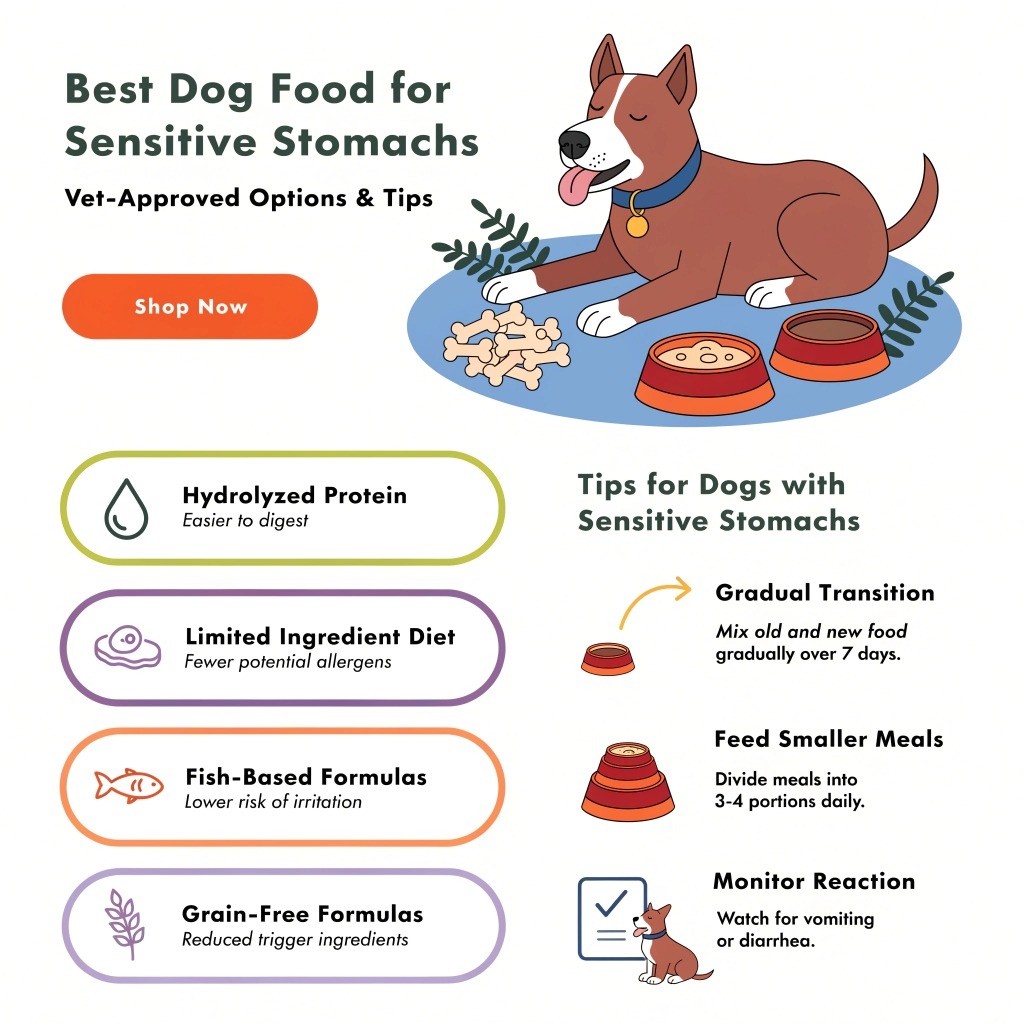
- UNDERSTANDING SENSITIVE STOMACH SYNDROME IN DOGS
- KEY INGREDIENTS TO AVOID IN DOG FOOD
- THE ROLE OF PROBIOTICS AND DIGESTIVE ENZYMES
- TOP VET-APPROVED DOG FOOD BRANDS FOR SENSITIVE STOMACHS
- THE TRANSITION PROTOCOL: PREVENTING DIGESTIVE FLARE-UPS
- FEEDING STRATEGIES THAT ACTUALLY REDUCE SYMPTOMS
- WHEN TO CONSIDER PRESCRIPTION DIETS VS. OVER-THE-COUNTER OPTIONS
- SUPPLEMENTS AND ADDITIONS THAT SUPPORT DIGESTIVE HEALTH
- RED FLAGS: WHEN YOUR DOG NEEDS IMMEDIATE VETERINARY CARE
- FAQ SECTION: YOUR MOST PRESSING QUESTIONS ANSWERED
- FAQ 1: How long does it take to see improvement after switching dog food?
- FAQ 2: Can grain-free dog food actually cause digestive problems?
- FAQ 3: Should I add water or broth to dry kibble for sensitive stomachs?
- FAQ 4: Are expensive dog foods always better for sensitive stomachs?
- FAQ 5: Can dogs with sensitive stomachs eat homemade food?
- FAQ 6: What's the difference between food allergies and food intolerances in dogs?
- CONCLUSION
Dealing with your dog's digestive issues? Sensitive stomach problems affect millions of pet owners, but the right food makes all the difference. This guide reveals vet-approved dog food options, ingredients to avoid, and proven feeding strategies to end the bloating, diarrhea, and vomiting cycle once and for all.
If your dog's stomach constantly rebels—with gas, loose stools, or picky eating—you're not alone. Sensitive stomachs are one of the most common complaints veterinarians hear from dog owners, and it's frustrating when your furry friend seems uncomfortable after every meal.
Here's the thing: not all dog foods are created equal, especially for pups with finicky digestive systems. Your dog's stomach needs specially formulated nutrition, and picking the wrong option just perpetuates the cycle of discomfort.
In this comprehensive guide, we'll walk you through everything you need to know about finding the best dog food for sensitive stomachs. You'll discover which ingredients trigger digestive upset, which vet-approved brands actually work, and actionable feeding strategies you can implement today. By the end, you'll have the knowledge to make a confident choice that keeps your dog happy, healthy, and symptom-free.
What you'll learn:
- Which ingredients wreak havoc on sensitive stomachs (and why)
- Top vet-approved dog food brands that deliver results
- How to transition to a new food without causing flare-ups
- Warning signs that demand veterinary attention
Let's dive in.
UNDERSTANDING SENSITIVE STOMACH SYNDROME IN DOGS
Why some dogs have sensitive stomachs is more nuanced than most people realize. It's not always about picky eating—it's usually about digestion. A sensitive stomach means your dog's gastrointestinal tract struggles to break down certain foods, absorb nutrients properly, or maintain a healthy gut microbiome.
The causes fall into several categories: food allergies, food intolerances, inflammatory conditions, or dysbiosis (imbalanced gut bacteria). Most owners confuse allergies with intolerances, but here's the critical difference: allergies trigger immune responses (itching, hives), while intolerances cause digestive distress without immune involvement.[source]
Common culprits include high-fat foods, excessive fiber, artificial additives, and common proteins like chicken or beef. Some dogs also struggle with grain-based diets, though grain-free has become a marketing buzzword more than science-backed necessity.
The domino effect is real: poor digestion leads to nutrient malabsorption, which weakens immunity, which increases inflammation. That's why addressing sensitive stomachs early prevents long-term health complications.
KEY INGREDIENTS TO AVOID IN DOG FOOD
Not all ingredients are created equal. Some actively trigger digestive upset, while others simply don't align with what sensitive-stomach dogs need.
High-fat content tops the list. Dogs with digestive issues struggle with fatty foods—they're harder to digest and often trigger pancreatitis. Look for dog foods under 15% fat content initially, then adjust based on your dog's response.
Artificial preservatives (BHA, BHT, ethoxyquin) are inflammatory and unnecessary. These chemicals serve no nutritional purpose and many veterinarians recommend avoiding them entirely. Natural preservatives like mixed tocopherols (vitamin E) are far safer alternatives.
Excessive fiber seems counterintuitive, but overloading on fiber actually irritates sensitive digestive systems. While fiber aids digestion in healthy dogs, sensitive-stomach pups need moderate, soluble fiber (think pumpkin, not excessive bran).
Low-quality protein sources and protein variety matter significantly. Some dogs react to specific proteins—chicken, beef, dairy—while others do fine. Additionally, foods with multiple protein sources can complicate identifying triggers. Single-protein formulas help narrow down sensitivities.
Corn, wheat, and soy are major inflammatory culprits, though not universally problematic. However, they're also highly allergenic and offer less nutritional density than other carbs. Eliminating them simplifies the equation.
THE ROLE OF PROBIOTICS AND DIGESTIVE ENZYMES
Here's what most pet owners miss: food quality alone isn't enough. The bacteria living in your dog's gut dramatically influence digestion, immunity, and overall health.
Probiotics are beneficial bacteria that restore gut balance. For sensitive-stomach dogs, probiotics can dramatically improve digestion, reduce inflammation, and increase stool quality. The best formulas contain multiple strains like Lactobacillus and Bifidobacterium, ideally 10+ billion CFUs per serving.
Digestive enzymes support protein, fat, and carbohydrate breakdown. Dogs with insufficient enzyme production struggle to digest even quality food. Products containing amylase, protease, and lipase target different macronutrients, making them powerful allies for sensitive stomachs.[source]
The combination works best: quality food + probiotics + enzymes = optimal digestion. Many premium dog foods for sensitive stomachs now include these additives, but adding standalone supplements offers flexibility if your current food lacks them.
TOP VET-APPROVED DOG FOOD BRANDS FOR SENSITIVE STOMACHS
Several brands consistently earn vet approval and real-world results. Here's what sets them apart:
Royal Canin Digestive Care is prescription-grade for a reason. It features highly digestible proteins (single-source poultry), low fat (12%), and prebiotic fiber designed for sensitive systems. Most vets recommend this first because clinical studies back its efficacy.
Hill's Science Diet Sensitive Stomach & Skin balances nutrition with digestive support through egg protein, low fat, and controlled fiber. It's widely available, moderately priced, and backed by veterinary research.
Purina Pro Plan Focus Sensitive Skin & Stomach delivers easily digestible proteins and added probiotics. The formula avoids corn, wheat, and soy, and many dogs see improvement within 2-3 weeks.
Farmina N&D Grain Free uses novel proteins (venison, fish) and limited ingredients, making it ideal for identifying triggers. While grain-free, it focuses on digestibility rather than marketing hype.
Merrick Limited Ingredient Diet offers single-protein options that help isolate problem foods. Their beef or turkey formulas contain minimal additives and straightforward ingredient lists.
Blue Buffalo Sensitive Stomach combines natural ingredients with added probiotics and mild proteins. It's premium-priced but accessible to most budgets and available at major retailers.
THE TRANSITION PROTOCOL: PREVENTING DIGESTIVE FLARE-UPS
Here's the thing: jumping to a new food overnight causes more problems than it solves. Even if the new food is better, abrupt changes shock the digestive system.
The golden standard is a 7-10 day gradual transition. Here's the proven schedule:
| Days 1-2 | 25% new food + 75% old food |
|---|---|
| Days 3-4 | 50% new food + 50% old food |
| Days 5-6 | 75% new food + 25% old food |
| Days 7-10 | 100% new food |
Monitor stools closely during this window. If diarrhea worsens, slow the transition to 14 days. If it improves, you've found your winner.
Some dogs benefit from adding bone broth or plain pumpkin during transition—these soothe the digestive tract while the bacteria adjust to new food. Additionally, feeding smaller, more frequent meals (3-4 times daily instead of 2) reduces digestive load during the transition phase.
If your dog vomits or shows severe symptoms, stop the transition and consult your vet. Not all digestive issues stem from food; some require medical intervention.
FEEDING STRATEGIES THAT ACTUALLY REDUCE SYMPTOMS
Food choice is one piece; feeding strategy is another. How you feed matters as much as what you feed.
Meal frequency influences digestion significantly. Instead of one large meal, split daily calories into 3-4 smaller portions. This reduces gastric stress and prevents overeating—a major trigger for sensitive-stomach flare-ups.
Temperature matters too. Slightly warm food (lukewarm, not hot) improves digestibility by mimicking natural body temperature, allowing enzymes to work more efficiently. This simple trick often produces visible results within days.
Pre-soaking kibble softens it and begins hydration, making it easier to digest. Soak dry food in warm water or low-sodium broth for 15-20 minutes before serving. This is especially helpful for very sensitive dogs or senior pups.
Consistent feeding times help regulate digestion. Dogs thrive on schedules—feeding at the same times daily trains the digestive system to expect and prepare for food.
Separate supplements and treats from meals by at least 30 minutes. Adding too many elements during meals confuses digestion and makes identifying triggers nearly impossible.
WHEN TO CONSIDER PRESCRIPTION DIETS VS. OVER-THE-COUNTER OPTIONS
The prescription vs. OTC debate comes down to severity and individual response. Here's how to navigate it:
Prescription diets (like Royal Canin or Hill's prescription formulas) undergo rigorous testing and are designed for specific conditions. They're ideal if your vet diagnoses inflammatory bowel disease, exocrine pancreatic insufficiency, or diagnosed food allergies. Insurance rarely covers them, but results often justify the investment.
OTC limited-ingredient diets work wonderfully for mild sensitivities without diagnosed conditions. They're more affordable, readily available, and often produce results comparable to prescription options for many dogs.
The practical approach: Start with high-quality OTC options. If symptoms persist after 4-6 weeks, escalate to prescription-grade. Your vet can guide this decision based on bloodwork and symptom severity.
Cost shouldn't determine the choice entirely—spending $10 more monthly on better food prevents $500+ vet bills from complications. However, cost-effective options exist; check local food banks or assistance programs if budget is tight.
SUPPLEMENTS AND ADDITIONS THAT SUPPORT DIGESTIVE HEALTH
Beyond food, strategic supplements amplify results. These aren't replacements for quality diet but powerful companions.
Bone broth contains collagen and amino acids that heal the gut lining. A tablespoon mixed into kibble or served as a meal topper provides digestive support without adding calories or complications.
Pumpkin puree (plain, not pie filling) delivers soluble fiber that regulates stools naturally. A teaspoon daily for small dogs, a tablespoon for large dogs, helps both diarrhea and constipation.
Slippery elm bark soothes inflamed digestive linings. Mix powdered form with a bit of water to create a paste, then add to food. It's particularly effective for dogs with inflammatory conditions.
Fish oil supplements reduce intestinal inflammation through omega-3 fatty acids. Choose dog-specific formulas to ensure proper dosing and purity. Many sensitive-stomach dogs improve dramatically with consistent fish oil supplementation.
L-glutamine is an amino acid that repairs damaged gut lining. While research in dogs is limited compared to humans, many holistic vets recommend it for chronic digestive issues.
Always introduce supplements gradually and one at a time. This prevents overwhelming the digestive system and helps identify which additions actually help.
RED FLAGS: WHEN YOUR DOG NEEDS IMMEDIATE VETERINARY CARE
Not all digestive upset is simple sensitive stomach. Certain symptoms demand immediate professional evaluation:
Bloody stools or vomit indicate serious issues like ulcers, parasites, or hemorrhagic gastroenteritis. Don't wait—call your vet immediately.
Severe lethargy combined with digestive symptoms suggests systemic illness beyond dietary issues. Infections, pancreatitis, or organ problems require diagnosis and treatment.
Inability to keep food down for more than 24 hours signals something beyond sensitivity. Persistent vomiting causes dehydration and requires veterinary intervention.
Extreme pain, bloating, or restlessness may indicate gastric dilatation-volvulus (GDV), a life-threatening emergency requiring immediate surgery. This is rare but demands urgent action.
Weight loss despite adequate food intake suggests malabsorption disorders like exocrine pancreatic insufficiency or inflammatory bowel disease. These require specific veterinary management beyond diet alone.
When in doubt, consult your veterinarian. Better safe than sorry, and early diagnosis prevents complications.[source]
FAQ SECTION: YOUR MOST PRESSING QUESTIONS ANSWERED
FAQ 1: How long does it take to see improvement after switching dog food?
Most dogs show improvement within 2-4 weeks, though some take up to 8-12 weeks for complete resolution. Stools typically improve first (within 5-7 days), followed by energy levels and coat quality. If zero improvement appears after 6 weeks, the food may not be the right fit—consult your vet about alternative approaches or potential underlying conditions.
FAQ 2: Can grain-free dog food actually cause digestive problems?
Grain-free doesn't automatically mean better for sensitive stomachs. While some dogs benefit from avoiding grains, others do fine with quality grain-inclusive foods. The real factor is digestibility and ingredient quality, not grain status. Many grain-free formulas use high-legume content, which some dogs find harder to digest than grains. Choose based on your dog's individual response, not marketing hype.
FAQ 3: Should I add water or broth to dry kibble for sensitive stomachs?
Absolutely. Adding warm water or low-sodium broth hydrates kibble, making it easier to digest and breaking it down partially before it reaches the stomach. This simple step dramatically reduces digestive stress. Most veterinarians recommend this practice for sensitive-stomach dogs, especially during food transitions.
FAQ 4: Are expensive dog foods always better for sensitive stomachs?
Price doesn't guarantee quality or results. Expensive marketing-driven brands sometimes underperform, while moderately priced options deliver excellent results. Focus on ingredient quality, digestibility rates, and real-world reviews rather than price tags. Your dog's body is the ultimate judge—results matter more than the price you paid.
FAQ 5: Can dogs with sensitive stomachs eat homemade food?
Homemade diets can work, but they require careful formulation to ensure nutritional balance. Consult a veterinary nutritionist to create balanced recipes—homemade food without professional guidance risks nutritional deficiencies. Additionally, homemade doesn't guarantee easier digestion; you must identify and exclude problem ingredients just as you would with commercial food.
FAQ 6: What's the difference between food allergies and food intolerances in dogs?
Food allergies trigger immune system responses (itching, hives, swelling), while intolerances cause digestive symptoms only (diarrhea, vomiting, gas) without immune involvement. Allergies require elimination diets and sometimes veterinary testing; intolerances often improve through dietary changes alone. Your vet can distinguish between them through observation and sometimes blood tests.
CONCLUSION
Finding the best dog food for sensitive stomachs isn't magic—it's methodical problem-solving. You've learned which ingredients cause problems, which brands deliver results, and how to transition safely without triggering flare-ups.
Here's the reality: your dog's health depends on three factors working together—quality food, proper feeding strategy, and when needed, supportive supplements. Skip any one element, and results suffer.
Start with one of the vet-approved brands recommended earlier. Follow the gradual transition protocol. Monitor your dog's response closely. If improvement appears, you've solved the puzzle. If not, escalate to prescription-grade options or deeper veterinary investigation.
Your dog's constant discomfort doesn't need to be permanent. The right approach transforms a struggling pup into a thriving one. For more insights on optimizing your dog's nutrition, explore our complete guide on pet nutrition fundamentals or check out our detailed comparison of top-rated sensitive stomach dog foods.
Don't settle for ongoing digestive issues. Take action today, and watch your dog's health transform.