
Apartment-Friendly Dog Breeds: Best Small Dogs for City Living
- Why Apartment-Friendly Dog Breeds Matter More Than You Think
- The Best Apartment Dogs: Our Top 9 Breeds Ranked by Adaptability
- French Bulldog – The Ideal Apartment Companion
- Pug – The Gentle Apartment Classic
- Boston Terrier – The Social, Playful Option
- Cavalier King Charles Spaniel – The Empathetic, Loving Breed
- Shih Tzu – The Low-Energy, Affectionate Lapdog
- Bichon Frise – The Cheerful, Hypoallergenic Option
- Pomeranian – The Compact, Alert Companion
- Dachshund – The Independent, Apartment-Sized Hound
- Maltese – The Gentle, Small-Space Specialist
- Noise Levels: Which Breeds Actually Stay Quiet
- Exercise Requirements: What Actually Works in Apartment Living
- Apartment-Specific Concerns: Separation Anxiety and Alone Time
- Grooming and Maintenance: The Hidden Costs of Apartment Dogs
- Socialization and Training: Building Confidence in Confined Spaces
- Health Considerations for Small Apartment Breeds
- Setting Your Apartment Dog Up for Success: Practical Tips
- FAQ: Your Apartment Dog Questions Answered
- What's the quietest dog breed for apartments?
- Can you leave apartment dogs alone all day while you work?
- Do apartment dogs get enough exercise without a yard?
- What's the best small dog breed for first-time owners in apartments?
- Are apartment dogs more prone to separation anxiety?
- How do I manage shedding with apartment dogs in small spaces?
- Conclusion
Want a dog that thrives in your apartment, not one that drives your neighbors crazy? Here's the truth: the right apartment dog breeds won't bark your landlord's ear off, don't need a backyard, and genuinely love smaller spaces. This guide cuts through the confusion and gives you the actual best small dog breeds for apartment living—plus exactly what to expect before you bring one home.
Living in an apartment and dreaming of getting a dog? You're not alone. But here's what keeps apartment dwellers up at night: Will my dog survive without a yard? Won't it bark constantly? Is apartment living actually cruel to dogs?
The good news: it's absolutely possible to have a happy, healthy dog in an apartment—you just need to choose the right breed. Not all small dog breeds are created equal. Some are calm and adaptable, while others will drive your neighbors (and you) absolutely crazy with constant barking or destructive energy.
This guide walks you through the best apartment-friendly dog breeds, what makes them work in city living, and what you need to know before adopting. Whether you're a first-time dog owner nervous about the commitment or a seasoned pet parent, you'll find the perfect companion for your urban lifestyle. We'll cover small dogs that actually thrive in apartments, explain why certain breeds work better than others, and show you exactly what to expect.
What you'll learn: The 9 best apartment dog breeds ranked by personality, exercise needs, and temperament, plus the real lifestyle requirements that matter for apartment living. By the end, you'll know exactly which breed fits your life—and how to set your dog up for success from day one.
Why Apartment-Friendly Dog Breeds Matter More Than You Think
Living in an apartment doesn't mean you can't be a dog parent—but it does mean you need to be strategic about breed selection. Here's why this matters.
Size Isn't Everything (But It Helps)
People assume apartment dogs need to be tiny, but that's not entirely true. What actually matters is temperament and exercise needs, not just poundage. A French Bulldog (20 lbs) can thrive in 400 square feet because they're naturally low-energy. Meanwhile, a Border Collie—even a smaller one—will lose their mind without constant mental stimulation and a massive yard.
The apartment-friendly breeds we're covering share three things: They don't require an acre to burn energy, they're naturally calm indoors, and they're not prone to anxiety when left alone. Size is the bonus feature.
Noise Levels Impact Your Housing Situation
Let's be real: your landlord cares about barking. Your neighbors definitely care about barking. Some dog breeds are vocal by nature—Dachshunds, Chihuahuas, and some terriers will alert-bark at every sound. Other breeds, like Bulldogs and Basset Hounds, are naturally quiet (unless you count snoring).
The quiet apartment dog breeds in this guide are selected specifically because they don't create constant noise complaints. This isn't just about being a good neighbor—it's about your lease and your sanity.
Exercise Needs Define Your Daily Reality
Here's what apartment living really demands: dogs that can exercise with you in reasonable spaces. This means breeds that do fine with 30-45 minute walks and indoor playtime, not dogs requiring endless running space.
When you choose an apartment-compatible breed, you're choosing a dog that's happier with apartment life than with a yard. That's not settling—it's matching the dog to the lifestyle.
The Best Apartment Dogs: Our Top 9 Breeds Ranked by Adaptability
French Bulldog – The Ideal Apartment Companion
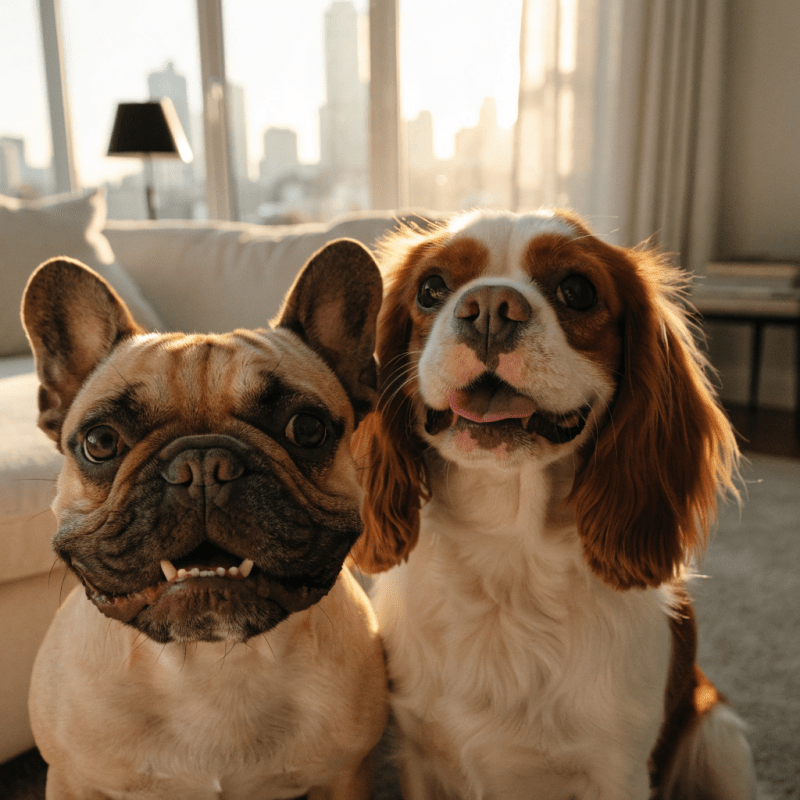
French Bulldogs are basically designed for apartment living. They're small (20-28 lbs), require only short walks, rarely bark without reason, and genuinely prefer lounging on your couch to running around a backyard. They have major charm, minimal maintenance, and an affectionate personality that makes them perfect for first-time owners.
Why they work: Low energy indoors, compact size, naturally quiet, love human company.
Reality check: They can have breathing issues (brachycephalic breeds), so hot weather requires careful management. They're also prone to separation anxiety, which means your apartment work-from-home situation? That's actually ideal.
Pug – The Gentle Apartment Classic
Pugs are apartment royalty. They're small (14-18 lbs), minimally exercise-dependent, and weirdly intelligent for their goofy appearance. They thrive on companionship and actually prefer staying close to their humans rather than exploring the neighborhood.
Why they work: Excellent with apartment noise levels, minimal exercise needs, affectionate with families, naturally adaptable to small spaces.
Things to know: Like Frenchies, they're brachycephalic (flat-faced), so they're sensitive to heat. But in a climate-controlled apartment? Perfect. They're also prone to overeating, so portion control matters.
Boston Terriers hit the sweet spot between playful and calm. They're around 12-25 lbs, they love people (making them fantastic for apartment buildings where you'll interact with neighbors), and they have enough personality to keep you entertained without being hyperactive.
Why they work: Friendly nature reduces neighborhood friction, moderate exercise needs, naturally quiet, adaptable to smaller spaces.
Key consideration: They need mental stimulation, not just physical exercise. That means puzzle toys and training sessions matter. But that's actually ideal for apartment life since you're spending quality time together indoors.
Cavalier King Charles Spaniel – The Empathetic, Loving Breed
Cavaliers are medium-small (24-30 lbs) and possibly the sweetest dogs you'll ever meet. They're not guard dogs, they're not aggressive, and they genuinely just want to be near people. For apartment living, that's perfect—they don't need to patrol territory or defend the space.
Why they work: Naturally calm indoors, minimal barking tendency, excellent with families, adaptable to apartment size.
Watch out for: They can develop separation anxiety if left alone too long (especially during your workday). That's where consistent routines and dog training fundamentals come in handy—teaching them alone-time isn't abandonment.
Shih Tzu – The Low-Energy, Affectionate Lapdog
Shih Tzus (9-16 lbs) are apartment living on four legs. They were literally bred to be companion dogs for royalty living in palaces. They're small, they prefer indoor time, and they love being the center of attention in your home.
Why they work: Minimal exercise requirements, naturally quiet, perfect for indoor lifestyle, excellent with first-time owners.
Reality: Their coat requires regular grooming (or you'll need to keep them trimmed short). That's an ongoing expense, but it's manageable. They also live 10-18 years, so this is a long-term commitment.
Bichon Frise – The Cheerful, Hypoallergenic Option
Bichon Frises (12-18 lbs) are small, fluffy, and naturally cheerful without being annoying. They're also hypoallergenic (or as close as dogs get), which matters if you're in a shared wall apartment and neighbors have allergies. They need moderate exercise but adapt well to smaller spaces.
Why they work: Good noise levels, adaptable to apartment size, hypoallergenic coat, naturally affectionate.
Important note: Regular grooming is essential. They need professional grooming every 4-6 weeks, which is an ongoing commitment and cost.
Pomeranian – The Compact, Alert Companion
Pomeranians (3-7 lbs) are tiny, which means they fit literally any apartment. They have big personalities for their size, but they're smart and responsive to training. When properly socialized and trained, they're quiet and adaptable.
Why they work: Extremely small size, minimal exercise needs, naturally intelligent, adaptable to tiny spaces.
The challenge: They can develop "small dog syndrome"—excessive barking and defensive behavior—if not properly trained early. That's where consistent training is crucial.
Dachshund – The Independent, Apartment-Sized Hound
Dachshunds (11-32 lbs, depending on variety) are surprisingly independent and adaptable to small spaces. The wiener dog's short legs mean less power in their stride, so they don't need extensive exercise. They're also naturally curious and intelligent, which means they're fun to live with.
Why they work: Compact size (standard or miniature), minimal exercise needs, naturally intelligent, adaptable personality.
Real talk: They can be barkers, especially if not properly trained. But that's breed tendency, not destiny. Early training and socialization make a huge difference.
Maltese – The Gentle, Small-Space Specialist
Maltese dogs (under 7 lbs) are possibly the ultimate apartment breed. They're tiny, naturally quiet, and genuinely prefer small spaces. They bond intensely with their owners and don't need extensive outdoor time.
Why they work: Extremely small, quiet by nature, minimal exercise needs, excellent for confined spaces, naturally affectionate.
Maintenance reality: Like Shih Tzus, they need regular grooming. Their white coat shows dirt, so frequent brushing is necessary. But again, it's manageable and keeps them comfortable.
Noise Levels: Which Breeds Actually Stay Quiet
This is the real apartment issue that nobody talks about enough. A dog breed's barking tendency can literally determine whether your landlord allows it.
Quiet apartment dogs like Bulldogs, Basset Hounds, and French Bulldogs rarely bark without reason. They might alert-bark once or twice if someone knocks, but they're not chronic vocalize. Meanwhile, Dachshunds, Chihuahuas, and some terriers are naturally vocal and need serious training to manage barking.
Here's the thing: no breed is completely silent. Every dog barks sometimes. But the breeds in this guide are selected because they're naturally quiet and responsive to training. That's the combination that works in apartments.
The complete guide to stopping dog barking covers this in depth, but the baseline is: choose a naturally quiet breed first, then use training techniques to manage any unnecessary barking.
Exercise Requirements: What Actually Works in Apartment Living
Here's what apartments demand: dogs that don't need three hours of running space per day.
The apartment-friendly breeds in this guide need 30-45 minutes of exercise daily. That's achievable with two 20-minute walks and some indoor playtime. Compare that to Border Collies (2+ hours minimum), Australian Shepherds (constant mental stimulation), or high-energy terriers (endless energy), and you see why breed selection matters.
Exercise for apartment dogs looks different. It's structured walks around the neighborhood, indoor fetch, puzzle toys, and training sessions. It's not a daily trip to the dog park (though they'll enjoy it). This actually works better for first-time owners because you're creating intentional bonding time rather than relying on a yard to tire them out.
The bonus: apartment-friendly breeds tire out mentally faster than they do physically. A 20-minute training session with puzzle toys drains energy better than an hour of random play.
Apartment-Specific Concerns: Separation Anxiety and Alone Time
Let's address the elephant in the room: what happens when you go to work?
Many apartment dogs do develop separation anxiety because they were bred to be companion animals, not independent outdoor dogs. That's not a flaw in the breed—it's a feature of breeds that bond intensely with their owners.
The real solution is management, not avoidance. This means:
- Teaching your dog that alone time is normal (start short, build gradually)
- Creating a calm environment with white noise
- Using enrichment toys while you're gone
- Maintaining consistent routines so your dog knows you always come back
If you work 8+ hours daily without a dog walker or midday break, apartment living gets complicated. But if you have flexibility, work from home part-time, or can hire a dog walker, apartment dogs thrive beautifully.
Some apartment-friendly breeds need consistent grooming. This isn't optional—it's necessary for their health and comfort.
Breeds like Shih Tzus, Bichon Frises, and Poodles need professional grooming every 4-6 weeks. That's $75-150+ per appointment, so it's a real budget item. But here's the reality: regular grooming keeps their coat healthy, prevents matting, and actually reduces shedding in some cases.
Other breeds like French Bulldogs and Pugs need minimal grooming (basic brushing and nail trims), which you can do at home or during occasional vet visits. That's a major cost advantage.
The apartment factor here is important: if a dog sheds heavily, you'll notice it more in 800 square feet than in a house with multiple rooms. So choosing breeds with manageable coat care matters for cleanliness and allergens.
Apartment living can actually make socialization harder if you don't intentionally create opportunities. Unlike dogs with yards who interact with neighborhood dogs constantly, apartment dogs need structured socialization.
This is where proper puppy socialization becomes crucial. Expose your dog to different people, sounds, and environments during critical developmental periods. This prevents fear-based behaviors that can manifest as excessive barking or anxiety in apartments.
The good news: apartment living forces more intentional training. You're taking your dog on walks, visiting parks, and exposing them to urban sounds (traffic, sirens, neighbors) naturally. That's actually ideal socialization—it just requires consistency.
Training is also non-negotiable. Basic obedience makes apartment life manageable. A dog that responds to "come," "stay," and "quiet" is a dog that fits apartment culture.
Health Considerations for Small Apartment Breeds
Small apartment dog breeds do have some health predispositions you should know about.
Brachycephalic breeds (French Bulldogs, Pugs) are prone to breathing difficulties, especially in heat. They need climate-controlled apartments and shouldn't exercise intensely in warm weather.
Tiny breeds (Maltese, Pomeranians) are prone to dental issues and patellar luxation (knee problems). Regular vet visits and appropriate exercise prevent most issues.
Cavalier King Charles Spaniels can develop heart issues later in life, so regular vet check-ups matter. Their affectionate nature can also make them vulnerable to anxiety if you're gone constantly.
Dachshunds are prone to back issues (intervertebral disc disease) due to their long spine. This means avoiding jumping and maintaining healthy weight—both easier in apartments with limited stairs.
None of these are dealbreakers. They're just things to watch for with breed-appropriate care. Regular vet visits, appropriate nutrition, and preventing obesity go a long way.
If your dog has specific health concerns like sensitive stomach issues, work with your vet on appropriate diet and nutrition. That's manageable in apartment settings because you control their diet completely.
Setting Your Apartment Dog Up for Success: Practical Tips
Getting the breed right is half the battle. Setting up your apartment correctly is the other half.
Create a comfortable zone: Your dog needs a space that feels like theirs—a bed, some toys, and access to a window. This becomes their safe spot when you're away or when apartment noise gets loud.
Invest in enrichment toys: Puzzle toys, chew toys, and interactive feeders keep your dog mentally stimulated during alone time. This prevents boredom-related behavior problems.
Establish routines: Dogs thrive on predictability. Consistent walk times, feeding schedules, and alone-time routines make apartment living feel stable and safe.
Manage noise exposure: Use white noise, music, or ambient sounds to mask street noise and neighbor sounds. This prevents anxiety-driven barking.
Keep up with training: Ongoing reinforcement of basic obedience prevents behavioral issues before they start. Apartment living doesn't forgive untrained dogs, so consistency matters.
Plan for exercise: Two daily walks, regular indoor playtime, and weekly trips to dog parks or training classes keep your dog physically and mentally healthy.
FAQ: Your Apartment Dog Questions Answered
What's the quietest dog breed for apartments?
The quietest apartment dog breeds are French Bulldogs, Bulldogs, and Basset Hounds. They rarely bark without reason and naturally prefer calm indoor environments. That said, any breed can be trained to reduce excessive barking, but choosing a naturally quiet breed gives you a huge head start.
Can you leave apartment dogs alone all day while you work?
Most apartment-friendly breeds can handle 6-8 hours alone, but that's pushing it. Separation anxiety is real, especially in breeds bred for companionship. The solution is gradual training, midday breaks or dog walkers, and creating a calm environment with enrichment toys. Full-time office work is challenging without support systems.
Do apartment dogs get enough exercise without a yard?
Absolutely, yes. The apartment breeds in this guide need 30-45 minutes of daily exercise, which is achievable with structured walks and indoor playtime. Yards actually create lazy dogs sometimes—they lounge outside without real exercise. Intentional daily walks and mental stimulation work better than free yard access.
What's the best small dog breed for first-time owners in apartments?
French Bulldogs and Cavalier King Charles Spaniels are the best for first-time owners. They're forgiving, naturally adaptable, minimally aggressive, and responsive to training. Shih Tzus are also excellent if you're prepared for grooming. Avoid Chihuahuas and toy breeds prone to excessive barking unless you're experienced.
Are apartment dogs more prone to separation anxiety?
Dogs bred for companionship (Cavaliers, Maltese, Shih Tzus) are prone to separation anxiety regardless of living situation, but apartments can magnify it since they're always close to their owners. The solution is intentional training from puppyhood—teaching your dog that alone time is normal and non-threatening. Start with short absences and build gradually.
How do I manage shedding with apartment dogs in small spaces?
Choose breeds with minimal shedding (Bichon Frises, Maltese, Poodle mixes) or be prepared for regular vacuuming and brushing with heavy shedders. Grooming frequency matters—frequent brushing removes loose hair before it hits your floor. Apartments show dirt and hair more, so invest in a good vacuum and lint rollers. Diet also matters—proper nutrition supports healthy coats.
Conclusion
Choosing an apartment-friendly dog breed isn't settling for less—it's actually setting your dog up for a better life. The breeds covered here aren't just small; they're designed for apartment living. They thrive in confined spaces, don't need yards to be happy, and genuinely prefer human companionship to constant outdoor roaming.
The real secret? Match the breed to your lifestyle, invest in training and socialization, and create an environment where your dog feels safe and stimulated. That's it. You're not compromising your dog's wellbeing by living in an apartment—you're giving them exactly what they evolved to want: consistent companionship, predictable routines, and a safe home.
Ready to welcome your perfect apartment companion? Start with the breeds that fit your schedule, commit to training, and remember: the best apartment dog is the one whose needs align with your reality. Learn more about first-time dog ownership to ensure you're fully prepared.