
Why Does My Dog Lick Me? Understanding Licking Behavior
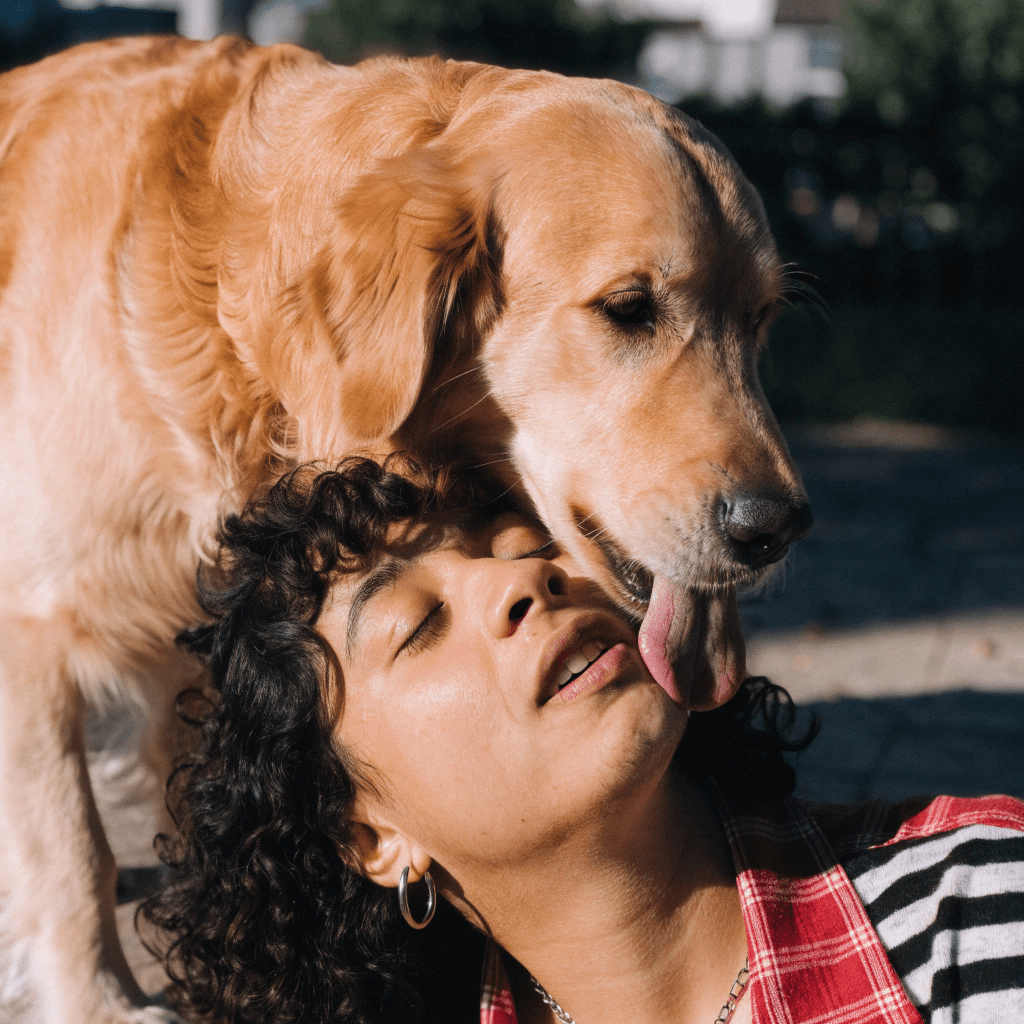
- THE SCIENCE BEHIND DOG LICKING: ANCIENT INSTINCTS
- AFFECTION & BONDING: "I LOVE YOU" IN DOG LANGUAGE
- SEEKING ATTENTION & DEMANDING INTERACTION
- SUBMISSION & RESPECT IN THE PACK HIERARCHY
- EXPLORATION & SENSORY GATHERING
- STRESS, ANXIETY & SELF-SOOTHING
- MEDICAL ISSUES & WHEN TO CALL THE VET
- AGE & LIFE STAGE DIFFERENCES
- BREED & PERSONALITY FACTORS
- HOW TO MANAGE EXCESSIVE LICKING: 5 PROVEN STRATEGIES
- FREQUENTLY ASKED QUESTIONS
- CONCLUSION: BUILDING A HEALTHIER RELATIONSHIP THROUGH UNDERSTANDING
Your dog licks you because they love you, but it's not the whole story. Licking is a multifaceted behavior rooted in canine communication, affection, and instinct. Whether it's excessive grooming, attention-seeking, or a sign of stress, understanding the why behind your dog's licking helps you respond appropriately and strengthen your bond.
If you've ever sat down on the couch and had your furry friend immediately dive in for a licking session, you've probably wondered: "Why does my dog lick me so much?" It's one of the most common questions dog owners ask, and the answer is more complex than "my dog just loves me."
Here's the thing: your dog does love you. But licking means so much more than that. It's a form of communication, a way to show affection, explore their world, and sometimes even a sign that something's not quite right. Dogs lick because it's hardwired into their DNA from their wolf ancestors, because they're seeking attention, because they're anxious, or simply because your salty skin is irresistible to them.
In this guide, we'll decode the mystery of dog licking behavior. You'll discover what your dog is really trying to tell you, when licking becomes a problem, and how to manage it effectively. By the end, you'll understand your dog's licking behavior and know exactly how to respond—whether that means embracing those puppy kisses or gently redirecting excessive licking.
What you'll learn:
- The 7 main reasons dogs lick humans
- How licking differs across ages and breeds
- When licking signals a potential health issue
- Proven strategies to manage excessive licking
- How to strengthen your bond through understanding this behavior
Let's dive in.
THE SCIENCE BEHIND DOG LICKING: ANCIENT INSTINCTS
Your dog's licking behavior didn't start with domestication. It goes way, way back.
In wolf packs, puppies lick their mother's mouth and face to encourage her to regurgitate food. This behavior, called "submissive licking," served a survival purpose: it's how young wolves communicated their hunger and respect to the pack leader. When dogs were domesticated thousands of years ago, they retained this instinct.
Today, your dog still carries these ancestral instincts. When your pup licks your face or hands, they're tapping into that ancient programming. It's not quite as dramatic as "feeding me food," but the underlying impulse is the same: connection, submission, and pack bonding.
But there's more to it than just instinct. Dogs also lick because their mouths are incredibly sensitive. They have taste receptors that help them explore and understand their environment. The salt on your skin? That's a flavor explosion to your dog. The scent glands in their nose light up when they taste your skin, providing sensory feedback we humans can barely imagine.
Here's why this matters: Understanding that licking is rooted in ancient instinct helps you see it as a normal behavior rather than just cute or annoying. It's communication. Your dog isn't being random—they're being a dog.
AFFECTION & BONDING: "I LOVE YOU" IN DOG LANGUAGE
Let's address the most common reason first: your dog licks you because they genuinely love you and consider you part of their pack.
When a dog licks you, they're releasing oxytocin—the same bonding hormone that humans release when we hug someone we love. It's not metaphorical. There's actual chemistry happening. Your dog feels good when they lick you, and they associate licking with positive feelings and closeness.
This is especially true if your dog licks you:
- After you come home (reunion licking)
- During calm, affectionate moments on the couch
- When they're relaxed and happy
- As a greeting ritual they've developed with you
For many dogs, licking is their version of a hug. They're saying, "You're part of my family, I feel safe with you, and I'm choosing to bond with you right now."
The flip side: Just because licking can signal affection doesn't mean all licking is affection. Excessive, obsessive, or frantic licking might indicate stress, anxiety, or medical issues—which we'll cover later.
The key is context. A few gentle licks during a calm moment? Pure love. Intense, obsessive licking that the dog seems unable to stop? Time to investigate deeper.
SEEKING ATTENTION & DEMANDING INTERACTION
Your dog has learned something important: licking gets your attention.
If your dog licks you and you respond—whether you pet them, talk to them, or try to stop them—you've just rewarded the behavior. Dogs are brilliant learners. They quickly figure out that licking = interaction. And honestly, they don't care if the interaction is positive or negative. Yelling at a dog to stop licking still counts as attention.
This is why attention-seeking licking often escalates. Your dog licks, you react, your dog gets rewarded, and the behavior strengthens. Over time, the licking becomes more persistent because it's a reliable way to get what they want: you.
Signs your dog is licking for attention:
- They lick when you're sitting quietly (and stop when you engage)
- They lick more when you're on your phone or working
- The licking intensifies if you try to ignore it
- They follow the licking with other attention-seeking behaviors (jumping, whining, nudging)
If this is your situation, here's the counter-intuitive part: the best response is often no response. Not punishment, not engagement—just neutral indifference. When they lick, you stop interacting, turn away, or leave the room briefly. When they stop licking, then you give them attention.
It takes consistency and patience, but it works.
SUBMISSION & RESPECT IN THE PACK HIERARCHY
When your dog licks your face or hands, there's an element of submission happening. They're acknowledging that you're part of their family structure, and they're showing you respect.
This is especially noticeable if:
- Your dog licks your hands or face when they've done something they know is wrong
- They lick you after you've corrected their behavior
- They lick you when other dogs are around (asserting their bond with you)
- They do the "lick their own lips before licking you" behavior
That lip-licking-before-licking is significant. It's often a calming signal. Your dog is saying, "I'm not a threat, please don't be upset with me."
In the dog world, licking is a sign of social bonding and deference. It's how lower-ranking pack members show respect to higher-ranking members. When your dog licks you, they're reinforcing their view of your relationship: You're the leader, I respect you, and I want to maintain this bond.
This isn't about dominance or strict hierarchy like we used to think. Modern dog behaviorists understand that pack dynamics are more nuanced. But the submissive element of licking is real, and it's part of how dogs maintain social structure.
EXPLORATION & SENSORY GATHERING
Dogs explore the world through their mouths. Period.
If your dog licks your hands, they're literally gathering information about you. Where you've been, what you've touched, what you've eaten—it's all encoded in the scent and taste on your skin. Your dog's nose and mouth are incredibly sophisticated sensory organs, and licking is how they conduct investigations.
This is why puppies are such aggressive lickers. They're in information-gathering mode 24/7. They're learning about their environment, their pack, and their place in it. As dogs mature, the exploratory licking usually decreases (though some dogs remain more lick-prone throughout their lives).
Context clue: If your dog licks your hands intensely after you've come home from outside, they're essentially reading your diary. They want to know everything you did while you were gone. If they lick your face or hands right before you eat, they're investigating what food is about to enter your mouth.
It's not weird. It's canine intelligence in action.
STRESS, ANXIETY & SELF-SOOTHING
Here's where licking behavior enters more concerning territory.
If a dog is stressed, anxious, or uncomfortable, licking—especially self-licking—becomes a self-soothing mechanism. It's similar to how humans might bite their nails when nervous or tap their feet anxiously. The repetitive motion is calming.
However, excessive licking of you can also signal that your dog is anxious or stressed and seeking comfort. Maybe they're responding to:
- Loud noises (storms, fireworks)
- Separation anxiety
- Changes in their environment
- Health discomfort (which manifests as nervous behavior)
- Your own stress (dogs mirror our emotional states)
Red flags for anxiety-related licking:
- Obsessive, repetitive licking that seems compulsive
- Licking that intensifies when the dog is alone
- Licking combined with other anxious behaviors (pacing, whining, destructive behavior)
- Licking that leaves red marks or hair loss
If you notice these signs, it's time to consult your vet or a certified dog behaviorist. Excessive licking can escalate into obsessive-compulsive behaviors that are difficult to reverse.
MEDICAL ISSUES & WHEN TO CALL THE VET
Sometimes, excessive licking is a red flag for underlying health problems.
Dogs might lick excessively due to:
- Skin conditions (allergies, dermatitis, infections)
- Parasites (fleas, mites—especially if they're licking specific areas)
- Digestive issues (mouth licking and lip licking can signal nausea or acid reflux)
- Oral problems (tooth decay, gum disease, mouth pain)
- Neurological issues (in rare cases, obsessive licking can indicate neurological disorders)
- Medications or dietary changes (some medications have side effects that include increased licking)
The key distinction: Is your dog licking you excessively, or are they licking themselves excessively? Self-licking localized to one area, especially if you see hair loss, redness, or sores, demands veterinary attention.
Excessive licking of you can also be related to these conditions—the dog might be seeking comfort because they're not feeling well, or they might have developed a behavioral habit around illness.
When to call your vet:
- Sudden changes in licking behavior
- Licking accompanied by other symptoms (lethargy, loss of appetite, skin lesions)
- Obsessive licking that the dog can't seem to control
- Licking that's causing injury (to them or you)
- Licking that started after a medication change
Your vet can rule out medical causes and either treat the underlying issue or refer you to a behaviorist if it's behavioral.
AGE & LIFE STAGE DIFFERENCES
How much a dog licks depends heavily on their age.
Puppies (8 weeks - 6 months): Puppies are lick machines. They're exploring, they're bonding, they're learning about the world, and they haven't learned social boundaries yet. Puppy licking is usually normal and endearing. However, teaching a puppy that not licking gets better rewards sets them up for healthier habits as an adult.
Adolescents (6 months - 2 years): Licking might increase during adolescence as the dog goes through hormonal changes and tests boundaries. They're figuring out what works socially. This is the sweet spot for redirecting licking behavior because they're still learning what's acceptable.
Adult Dogs (2-7 years): Licking should be moderate and context-appropriate. Sudden changes in licking behavior during this phase warrant investigation.
Senior Dogs (7+ years): Licking sometimes increases in senior dogs due to cognitive changes, medical issues (like dental pain), or anxiety related to aging. Senior dogs also sometimes become more affection-seeking and may lick more frequently.
Breed tendencies matter too. Some breeds are just more lick-prone. Spaniels, retrievers, and some toy breeds are famous for being lickers. It's partly genetics and partly their breeding history—dogs bred for close human interaction tend to be more affectionate and communicative through licking.
BREED & PERSONALITY FACTORS
Not all dogs lick equally.
Some breeds have been selectively bred for behaviors that involve more mouth contact and affection-seeking. Retrievers, for example, were bred to carry game gently in their mouths—that soft-mouth trait often translates into being more tactile and lick-prone with humans.
Other factors:
- Toy breeds often lick more, possibly because they're held closer and have more face-to-face interaction
- Working breeds might lick less overall but show specific licking behaviors related to their job
- Individual personality matters enormously—some dogs are just more physically affectionate than others
- Socialization history affects how a dog uses licking to communicate
Your dog's individual personality is unique. What's "normal" licking for a Golden Retriever might be excessive for a German Shepherd, or vice versa. You know your dog best. If their licking behavior is within their normal range, consistent, and not harmful, it's probably fine.
HOW TO MANAGE EXCESSIVE LICKING: 5 PROVEN STRATEGIES
Strategy 1: Remove the Reward
Stop rewarding licking. This means:
- Don't pet them when they lick
- Don't talk to them or make eye contact
- Turn away or leave the room
- Resume interaction only when licking stops
This requires patience and consistency from everyone in your household. It takes weeks to see results, but it works.
Strategy 2: Redirect to an Alternative Behavior
Teach your dog an incompatible behavior. You can't lick and hold a toy in your mouth simultaneously. So:
- Offer a puzzle toy when they start licking
- Reward them heavily for playing with the toy instead
- Make the toy more interesting than you are (try puzzle toys with treats)
Strategy 3: Manage Environmental Triggers
If your dog licks when you're on the couch, sit on the floor instead. If they lick when you're working, set up a physical barrier or use a playpen. Environmental management buys you time while you work on training.
Strategy 4: Increase Exercise & Mental Stimulation
A tired dog is a less-licky dog. Many excessive licking cases improve dramatically when the dog gets more physical exercise and mental enrichment. Aim for at least 30-60 minutes of exercise daily, depending on breed and age.
Strategy 5: Consult a Professional
If licking is obsessive, compulsive, or accompanied by anxiety, enlist help from a certified dog behaviorist or trainer. They can identify triggers and create a customized management plan. Your vet can also prescribe anti-anxiety medications if needed while you work on behavior modification.
FREQUENTLY ASKED QUESTIONS
Q1: Why does my dog lick my face so much?
Face-licking is deeply rooted in bonding behavior. Your dog licks your face because:
- It releases oxytocin (the bonding hormone) for both of you
- Your face is closest to your mouth and eyes—vital organs to care for in pack dynamics
- Your face has strong scent glands and unique tastes
- It's a submissive gesture showing respect and affection
However, excessive face-licking can also signal attention-seeking or anxiety. Context is everything. A dog that licks your face during calm moments and responds to boundaries is showing healthy affection. A dog that obsessively licks despite attempts to redirect is signaling a need for intervention.
Q2: Is it normal for dogs to lick their owners?
Absolutely. Licking is a completely normal canine behavior, and most dogs lick their owners to some degree. It's an instinctual form of communication and bonding that dates back to their wolf ancestors. The frequency and intensity vary based on breed, age, personality, and individual history, but the behavior itself is entirely normal and healthy.
What matters is the context and intensity. Casual licking during affectionate moments? Normal. Constant, compulsive, obsessive licking that the dog can't control? Time to investigate.
Q3: Can dog licks transmit diseases to humans?
While dog saliva does contain bacteria, the risk of disease transmission through licking is minimal for most people. Dogs' mouths are not "cleaner" than humans' mouths (a common myth), but healthy dogs rarely transmit illness through saliva contact.
That said, certain populations should be cautious:
- People with compromised immune systems
- Newborns and very young infants
- Elderly individuals with health conditions
- People with open wounds or broken skin (where bacteria can enter)
If you're in these categories, it's reasonable to discourage licking. For most healthy adults and children, occasional dog licks are not a significant health risk. However, good hygiene practices (washing your hands and face after dog interaction) are always recommended.
Q4: How do I stop my dog from licking me too much?
Here are the most effective approaches:
- Remove the reward – Don't react to licking. No talking, petting, or eye contact.
- Redirect behavior – Offer a toy or puzzle when licking starts.
- Increase exercise – Many excessive licking cases resolve with more activity.
- Set boundaries – Use a playpen or baby gate to create space when needed.
- Train an alternative – Teach "sit," "down," or "go to your bed" as incompatible behaviors.
- Rule out medical issues – Visit your vet to ensure no underlying health problems.
- Manage stress – Reduce anxiety triggers if licking is stress-related.
The key is consistency. Everyone in your household must respond the same way to licking. Mixed messages delay progress significantly. Most dogs see improvement within 2-4 weeks of consistent management.
Q5: What does it mean when a dog licks your hands?
Hand-licking typically means:
- Affection – Your hands are associated with petting and care
- Exploration – They're reading what you've touched and where you've been
- Submission – Showing respect and bonding, especially if they lick before jumping up
- Seeking attention – If followed by eye contact or nudging
- Salt-seeking – Your hands have salt and interesting scents
Hand-licking is usually less intense than face-licking and is generally a positive sign of bonding. However, if it's obsessive or your dog seems unable to stop, it warrants further investigation.
Q6: Is dog saliva good or bad for you?
The nuanced answer: Dog saliva is neither inherently good nor bad for humans. It contains natural antimicrobial compounds that are beneficial to dogs, but these don't significantly help humans. The "dog saliva heals wounds" myth isn't supported by science.
However, saliva isn't dangerous for healthy individuals either. It's just saliva—moist, bacteria-laden (like all saliva), but not harmful in normal amounts of contact for most people.
For wound care: Don't rely on dog saliva to clean wounds. Use soap, water, and appropriate medical care. A dog licking an open wound can actually introduce bacteria, not prevent infection.
For general health: Regular contact with dog saliva doesn't harm healthy people. It's natural, normal, and part of dog ownership. Just maintain basic hygiene: wash your hands and face regularly, don't let dogs lick your mouth or eyes, and avoid direct saliva contact if you have open wounds or a compromised immune system.
CONCLUSION: BUILDING A HEALTHIER RELATIONSHIP THROUGH UNDERSTANDING
Your dog's licking behavior isn't random. It's communication, bonding, seeking, submitting, exploring, and sometimes worrying—all wrapped up in a simple action. By understanding why your dog licks, you're better equipped to respond appropriately and strengthen your relationship.
Here's the bottom line: Some licking is healthy and beautiful. It's how your dog says "I love you" and "you're part of my pack." But excessive licking—whether driven by anxiety, attention-seeking, or medical issues—needs attention and management.
The good news? With consistency, patience, and the right approach, you can address excessive licking while preserving the healthy affection your dog shows you. Most dogs respond well to redirected behavior, increased exercise, and clear boundaries.
If you're struggling with excessive licking despite trying these strategies, don't hesitate to consult a certified dog behaviorist or trainer. They're trained to identify the specific triggers behind your dog's behavior and create a personalized plan.
In the meantime, embrace the licks that are healthy expressions of affection. Those gentle licks during calm moments? That's your dog saying they trust you, they love you, and they're happy to be part of your pack. That's worth cherishing.
Looking to build an even stronger bond with your dog? Check out our complete guide to bonding with your dog in 30 days for additional strategies and activities that deepen your connection.