
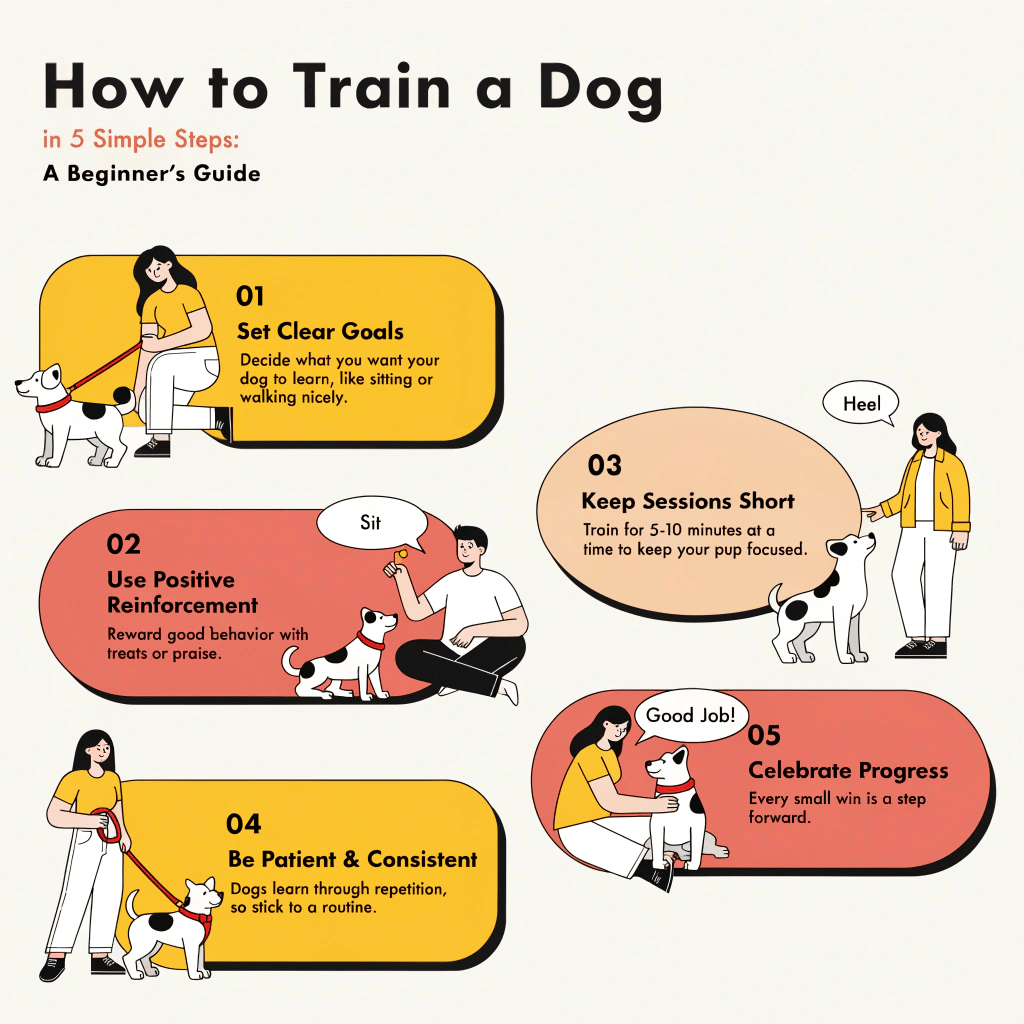
How to Train a Dog in 5 Simple Steps: A Beginner's Guide
- Understand Your Dog's Learning Style
- Choose Your Training Method & Timing
- Step 1 - Start With the Foundation
- Step 2 - Master the Basic Commands
- Step 3 - Build Impulse Control & Patience
- Step 4 - Solve Common Behavior Problems
- Step 5 - Build on Success & Continue Training
- Special Situations - Puppies vs Adult Dogs
- Troubleshooting - When Training Stalls
- Frequently Asked Questions
- Q1: How old should a puppy be to start training?
- Q2: What is the best training method for beginner dog owners?
- Q3: How long does it take to train a dog basic commands?
- Q4: Can you train an adult dog or is it too late?
- Q5: What are the most important commands every dog should know?
- Q6: How do you handle a dog that won't listen during training?
- Conclusion
Dog training doesn't have to be complicated or time-consuming. By following these 5 proven steps and understanding your dog's learning style, you'll build a stronger bond while teaching essential commands in just weeks. Whether you're working with a puppy or adult dog, this beginner-friendly guide shows you exactly how to train a dog using positive reinforcement and patience.
Teaching your dog new behaviors can feel overwhelming, especially if you're a first-time dog owner. The good news? Dog training doesn't require expensive classes or professional trainers—you just need patience, consistency, and the right approach. In this complete guide, you'll discover how to train a dog using methods that actually work, whether you're dealing with a stubborn puppy or an older pup picking up commands for the first time.
We'll walk you through 5 actionable steps that have transformed thousands of dogs and their owners, plus expert insights into why these techniques work. If you're serious about building a well-behaved companion, you're in the right place. For additional resources on dog behavior, check out our guide to understanding dog body language, which pairs perfectly with training.
What you'll learn: The exact 5-step framework for dog training | How to set up your training environment for success | Why positive reinforcement beats punishment | Common training mistakes and how to avoid them | Troubleshooting solutions for stubborn dogs
Understand Your Dog's Learning Style
Why Every Dog Learns Differently
Here's something most beginners don't realize: not every dog responds to the same training method. Some dogs are food-motivated go-getters, while others need physical praise or playtime to feel rewarded. Before you even start teaching your dog to sit or stay, you need to understand what makes them tick. This foundational knowledge separates successful trainers from frustrated owners.
Think about your dog's personality. Is your pup energetic and playful, or more laid-back and independent? Does she light up when you pull out treats, or does she respond better to a good game of fetch? These observations aren't random—they're clues about how to train a dog efficiently. Dogs with high prey drives might respond best to chase games as rewards, while food-motivated dogs will work hard for a single piece of kibble.
The Three Core Learning Styles
Your dog falls into one of three primary learning categories. Food-motivated dogs are straightforward to train—they'll repeat behaviors that lead to treats. These pups thrive on high-value rewards like chicken, cheese, or commercial training treats. Play-motivated dogs get excited about toys, fetch, or tug-of-war, making playtime the ultimate reward. Finally, affection-motivated dogs live for praise, petting, and your attention. Many dogs actually blend two or three styles, so observation is key.
The mistake most beginners make? They assume their dog learns the same way their neighbor's dog does. One training method won't work for everyone. By identifying your dog's learning style early, you'll skip months of frustration and see results within days. This is why understanding how to train a dog starts with understanding your individual companion. Learn more about positive reinforcement techniques that work with every dog personality type.
Choose Your Training Method & Timing
Positive Reinforcement vs Other Approaches
When you search for dog training advice, you'll encounter terms like "dominance training," "aversive methods," and "positive reinforcement." Here's what science backs up: positive reinforcement works faster, creates a stronger bond, and produces well-adjusted dogs. This method rewards desired behaviors instead of punishing unwanted ones. When your dog sits and you reward with a treat, she learns that sitting = good things happen.
The alternative—punishment-based training—might stop a behavior temporarily, but it creates anxiety and erodes trust. Dogs trained this way often become either aggressive or fearful. They learn to avoid certain behaviors around their owner, not because they understand what's right, but because they're afraid. That's not the relationship you want. When you learn how to train a dog using positive methods, you're investing in a happy, confident companion.
Modern dog trainers and veterinary behaviorists almost universally recommend positive reinforcement. It's not soft or permissive—it's strategic. You're teaching your dog that cooperation pays off. This approach works for everything from basic obedience to complex tricks and problem behaviors.
Perfect Timing: When & How Often to Train
Timing matters more than most people realize. Your dog's attention span, energy level, and hunger all affect training success. Here's the reality: a 10-minute focused session beats a 30-minute exhausting marathon. During those 10 minutes, your dog is engaged, learning quickly, and actually enjoying the process.
Optimal training windows happen when your dog is moderately hungry (not full, not desperate for a meal), energetic but not overstimulated, and free from distractions. Many pros recommend training right before meals—your dog is motivated but not frantic. For puppies under 12 weeks, keep sessions to 3-5 minutes. Older puppies and adult dogs can handle 10-15 minutes before their focus drops. The golden rule? End on a successful note and leave them wanting more. If you know how to train a dog with proper timing, you'll see transformation in weeks rather than months.
Step 1 - Start With the Foundation
Setting Up Your Training Space
Before teaching your dog to sit or come, create an environment where success is nearly guaranteed. This means minimal distractions—no other dogs, no kids running around, no TV in the background. A quiet room in your house works perfectly. You want your dog's full attention on you and the reward, not on a squirrel outside or the mailman arriving.
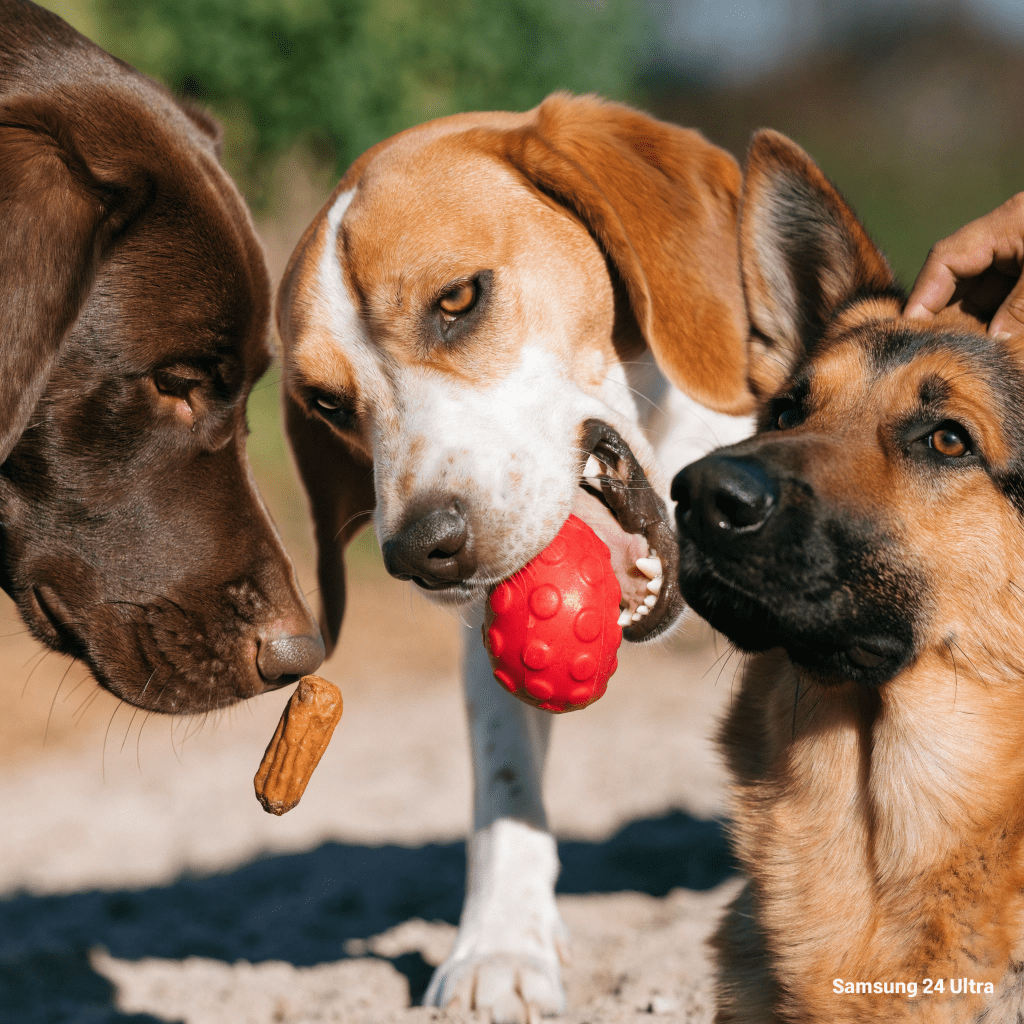
Gather your training supplies: high-value treats your dog goes crazy for, a 4-6 foot leash, and optional props like a clicker (a small device that makes a distinct sound). Some trainers swear by clickers because they mark the exact moment your dog does something right. Others skip them entirely. Both work—it's about what feels natural to you.
The environment setup is more important than people think. When you're learning how to train a dog, controlling variables is half the battle. A dog that performs perfectly in your quiet living room might struggle in a park where dozens of distractions compete for attention. That's normal. You'll gradually add distractions once your dog masters behaviors in calm settings.
Establishing Your Training Rhythm
Consistency beats intensity every single time. Training your dog for 10 minutes daily is infinitely more effective than 1 hour-long session weekly. Your dog's brain works through repetition and routine. When training happens at predictable times, your dog learns faster and retains information better.
Many successful owners train right before meals or walks—times when their dog is naturally motivated. This creates a pattern: training session leads to eating or playtime, which motivates eager participation. You can also break training into micro-sessions throughout the day. Teach "sit" in the morning, "stay" at lunch, and "down" in the evening. Your dog gets multiple learning opportunities without burnout.
The psychological principle here is called "spaced repetition." Your dog's brain consolidates learning better when lessons are spread over time. This is why how to train a dog requires patience as much as technique. You're not trying to cram everything into one intense week—you're building lasting behavioral changes through consistent, joyful practice.
Step 2 - Master the Basic Commands
Teaching Sit - The Gateway Command
"Sit" is typically the easiest command to teach, which is why it's the perfect starting point. Here's the exact process: hold a treat close to your dog's nose, then slowly move it up and back toward their ears. Your dog's natural response is to follow the treat with their eyes and nose, which causes their bottom to lower to the ground. The moment their rear touches the floor, say "Sit!" enthusiastically, then immediately reward with the treat and praise.
Repeat this 5-10 times during a training session. Your dog will quickly understand that the word "sit" predicts the following sequence: treats appear, they lower their rear, and good things happen. Within 3-5 days of short daily sessions, most dogs reliably sit on command. This builds confidence for both you and your pup. When you discover how to train a dog using this foundational approach, everything else becomes easier.
A pro tip: practice in multiple locations—your kitchen, living room, backyard—so your dog generalizes the command beyond one specific spot. Dogs don't automatically understand that "sit" means the same thing everywhere. By training across environments, you're teaching the behavior itself, not location-specific responses.
Teaching Come - The Most Important Command
"Come" is arguably the most valuable command for safety and freedom. A dog that reliably comes when called can play off-leash, which enriches their life tremendously. The mistake most owners make? Using "come" as a prelude to something the dog dislikes (like nail trimming or ending playtime). Your dog learns that coming = fun ends, so they ignore you.
Here's how to train a dog to come properly: make it always worth their while. When you call "come," use your most exciting voice and have the best reward ready—high-value treats, favorite toy, enthusiastic praise. Practice in low-distraction environments first. Start just 5 feet away, call your dog's name followed by "come," and reward immediately when they respond. Gradually increase distance as reliability improves.
Never chase your dog or use "come" to end something they're enjoying. Instead, occasionally reward them with extra playtime or treats for coming. Your dog should learn that responding to "come" is the best decision they can make. This mindset shift transforms training. When you understand how to train a dog with this psychology, reliability skyrockets.
Step 3 - Build Impulse Control & Patience
Why Impulse Control Changes Everything
A dog with good impulse control doesn't jump on guests, doesn't steal food from the counter, and doesn't lunge at other dogs. Impulse control is arguably the single most important skill you can teach, and fortunately, it's learnable at any age. This is about teaching your dog that waiting pays off better than reacting immediately.
The foundation is teaching "wait" or "stay." Start simple: hold a treat, say "stay," wait 2 seconds, then reward. Your dog learns that holding still = treats come. Gradually extend the duration—3 seconds, 5 seconds, 10 seconds. Most dogs reach 30 seconds of reliable stay within 2-3 weeks. This might seem trivial, but it's transformative. A dog that waits for permission is safer and more pleasant to live with.
Practical Impulse Control Exercises
Here are four exercises that build impulse control naturally: The "Wait at the Door" exercise: Before going outside, have your dog sit and wait for permission before exiting. The "Leave It" command: Place a treat on the floor, cover it with your hand, and reward your dog when they look away instead of grabbing. The "Release" protocol: During meals, place the bowl down, ask your dog to wait, then say "okay" to release them to eat. The "Settle" command: Reward your dog for calmly lying down while you read or work.
These everyday exercises train how to teach a dog that impulse control earns rewards. You're not punishing enthusiasm—you're redirecting it productively. Dogs naturally become more thoughtful and less reactive over time. This has spillover effects: less jumping, less pulling on leash, less reactive behavior to triggers. Impulse control is foundational to everything.
Step 4 - Solve Common Behavior Problems
Jumping on People
Your dog jumps because it works. They learned that jumping gets attention—even negative attention like yelling is still attention. When guests arrive and your pup starts launching, they're excited and seeking interaction. The solution? Ignore jumping, reward calm greetings. Turn away when your dog jumps, then only reward with pets and attention when all four paws touch the ground.
Teach guests the same approach. "Don't acknowledge jumping—only greet her when she settles." It sounds harsh, but you're teaching your dog that jumping makes you unavailable, while calm behavior unlocks your attention. Most jumping problems resolve within 2-3 weeks because the behavior stops being rewarded. Understanding how to train a dog means addressing the motivation behind behaviors, not just the behavior itself.
Leash Pulling
A dog pulling on leash is communicating frustration and excitement about their environment. They've learned that pulling forward results in getting where they want to go. Reverse this: the moment leash tension increases, you stop moving. Your dog learns that pulling actually slows progress, while loose leash = forward movement.
This requires patience. You'll move slowly on some walks, especially early on. But consistency works—within 1-2 weeks, most dogs improve dramatically. The advanced version? Teach "heel" for close walking and "sniff" for exploratory walks where your dog can naturally pull slightly but not excessively. This respects their nature while maintaining your control. When you know how to train a dog around their motivations, problem behaviors become solvable.
Step 5 - Build on Success & Continue Training
Progressive Training - What Comes After Basics
Once your dog masters sit, come, stay, and down, you have options. Some owners teach tricks like play dead, roll over, or spin. Others focus on real-world skills like "heel" for walks, "place" for settling on a bed, or "leave it" for safety. The sequence matters less than consistency and your dog's readiness.
Choose commands based on your lifestyle. A dog who spends time at outdoor cafes benefits from "settle." A dog with prey drive benefits from strong "leave it" training. A working dog benefits from advanced obedience. The principle remains identical: identify the behavior, mark it, reward it, practice it consistently. This is how to train a dog at any level.
The most successful trainers never stop learning. They observe their dog's natural behaviors, identify which ones cause problems, and systematically address them. They also celebrate wins—noticing when their dog chooses calm over chaos, when impulse control kicks in, when training clicks into place. That's when the joy of dog training becomes apparent.
When to Seek Professional Help
If you've invested 4-6 weeks of consistent practice and still aren't seeing progress, consider working with a certified professional. Similarly, if your dog displays aggression, extreme anxiety, or compulsive behaviors, professional guidance matters. A good trainer assesses your specific situation and tailors solutions. They're not there to make your dog robotic—they're there to unlock your dog's best self.
Look for trainers certified through organizations like IAABC or APDT. They use science-based methods and can explain their reasoning. The relationship between you, your trainer, and your dog should feel collaborative, not authoritarian. When selecting help, remember that you're learning to train your dog long-term, not hiring someone to do it for you.
Special Situations - Puppies vs Adult Dogs
Training Puppies: Shorter Sessions, More Patience
Puppies are learning machines, but they're also easily overwhelmed. A 10-week-old puppy can't focus for more than 5 minutes. They're also dealing with house-training, basic manners, and socialization simultaneously. Keep puppy training sessions extremely short and fun. Celebrate every small win—puppy sat for 2 seconds? Party! That's progress.
Puppies also go through developmental stages where they seem to "forget" training. This is completely normal. Around 4-6 months, many puppies enter an independence phase where they test boundaries. This doesn't mean your training failed—it means you need consistency. Stick with the process and they come through the other side with solid foundation.
House-training should run parallel to obedience training. Take puppies out frequently, celebrate pottying outside, and calmly clean accidents. By 16 weeks, most puppies understand the basics. The timeline depends on consistency, but know that any setbacks are developmental, not permanent failure. How to train a dog starts with realistic expectations about the dog's age and ability.
Training Adult Dogs - It's Never Too Late
"You can't teach an old dog new tricks" is absolutely false. Adult dogs often train faster than puppies because they have longer attention spans and calmer energy. Sure, they might have ingrained bad habits, but these are solvable with patience and consistency. Many rescue dogs blossom within weeks once they understand what's expected.
The secret with adult dogs is extra patience for the first phase. They might need 4-6 sessions to understand what "sit" means if they've never trained before. But once something clicks, they own it. I've trained 10-year-old dogs who became model citizens. The barrier isn't age—it's willingness to practice consistently. Adult dog training often moves faster because there's no puppy chaos interfering.
Troubleshooting - When Training Stalls
Your Dog Knows Commands at Home But Not Outside
This is the #1 complaint from owners. Your dog sits flawlessly in your living room but ignores you at the park. Welcome to the reality of generalization. Your dog isn't being stubborn—they haven't yet learned that "sit" means the same thing everywhere. This requires systematic exposure.
Start with low-distraction outdoor locations: your quiet backyard or an empty parking lot. Practice basic commands here multiple times until reliability is solid. Then gradually add environmental challenges—training in noisier parks, around other dogs (at a distance), near interesting smells. You're progressively teaching your dog that commands apply everywhere. This takes time, but it's absolutely worth the effort. When you truly understand how to train a dog, you accept that generalization is a skill itself that requires practice.
Your Dog Has Selective Hearing
If your dog responds to some people but not others, the difference is usually reward timing and consistency. The person they reliably listen to is probably more consistent with rewards and clearer with communication. Everyone in your household needs to enforce the same rules and use the same commands. Your dog learns fast when expectations are unified.
Also check: are you rewarding the right behavior? Sometimes owners accidentally reward bad behavior. Your dog jumps, you say "down," they jump again, and you finally pet them—congratulations, you've rewarded jumping. Timing matters enormously. The moment your dog does the right thing, reward happens. Delay = confusion.
Frequently Asked Questions
Q1: How old should a puppy be to start training?
You can start training the moment you bring your puppy home, even at 8 weeks. Puppies have surprising learning capacity. Keep sessions very short (3-5 minutes) and focus on one command at a time. House-training and basic manners should begin immediately. However, advanced training and off-leash reliability typically require neurological maturity, which happens around 6-12 months depending on breed. Start early, but keep expectations age-appropriate.
Q2: What is the best training method for beginner dog owners?
Positive reinforcement is scientifically proven most effective and is recommended by modern veterinary behaviorists. Start with high-value treats, use a consistent command word, reward immediately, and keep sessions short. Avoid punishment-based methods—they create anxiety and damage your relationship with your dog. If you're overwhelmed, working with a certified positive reinforcement trainer for even 2-3 sessions can clarify the process and boost your confidence dramatically.
Q3: How long does it take to train a dog basic commands?
Most dogs master basic commands like sit, down, and stay within 2-4 weeks of consistent daily practice. Reliable "come" might take 4-8 weeks because it requires higher reliability. Remember that "knowing" a command and reliably responding in all situations are different things. The 2-week puppy might sit at home but need 8 more weeks to sit reliably around distractions. Consistency matters more than speed.
Q4: Can you train an adult dog or is it too late?
It's absolutely never too late. Adult dogs often learn faster than puppies because they can focus longer. Dogs of any age can learn new behaviors if you're consistent. Some 10-year-old rescue dogs transform within weeks once they understand what's expected. The timeline depends on the dog's background and your commitment, not their age. Don't let age discourage you—dive in and be surprised at how capable your dog is.
Q5: What are the most important commands every dog should know?
The essential five are: Sit, Down, Stay, Come, and Leave It. Sit and Down are foundation behaviors. Stay teaches impulse control. Come is critical for safety and freedom. Leave It prevents them from eating dangerous things. Beyond these, focus on commands that address your specific dog's challenges—like "heel" for pullers or "place" for anxious dogs. Tailor training to your lifestyle rather than training every possible command.
Q6: How do you handle a dog that won't listen during training?
First, check if the reward is actually rewarding to your dog—maybe those treats aren't motivating. Second, ensure you're training when they're moderately hungry and not overstimulated. Third, verify you're not accidentally rewarding bad behavior. If nothing works, try a completely different reward—some dogs prefer playtime to treats. Finally, eliminate distractions during early training. A dog that won't listen at the park might be completely reliable at home. Build reliability progressively before training around chaos.
Conclusion
Training your dog doesn't require special talent or years of experience—it requires understanding, consistency, and patience. By following these 5 simple steps, you've got everything needed to shape your dog's behavior and build an incredible bond. Start with understanding your dog's learning style, choose positive reinforcement methods, master basic commands, build impulse control, and progressively work through more complex behaviors.
Remember that every dog learns at their own pace. Some dogs will sit reliably in one week; others need three. Both are normal. The magic happens when you commit to consistency, keep sessions short and positive, and celebrate small wins. Your dog is genuinely trying their best to understand what you want—you're just teaching them the language.
The relationship you build through training extends far beyond commands. When your dog learns to trust your guidance and understand your communication, everything improves. Walks become pleasant, vet visits become manageable, and your dog becomes the companion you always imagined. If you're ready to deepen that relationship, start with Step 1 today. For more training insights and advanced techniques, check out our complete dog training resource center where we cover everything from puppy fundamentals to complex behavioral modification. Your best-trained dog is just weeks away.